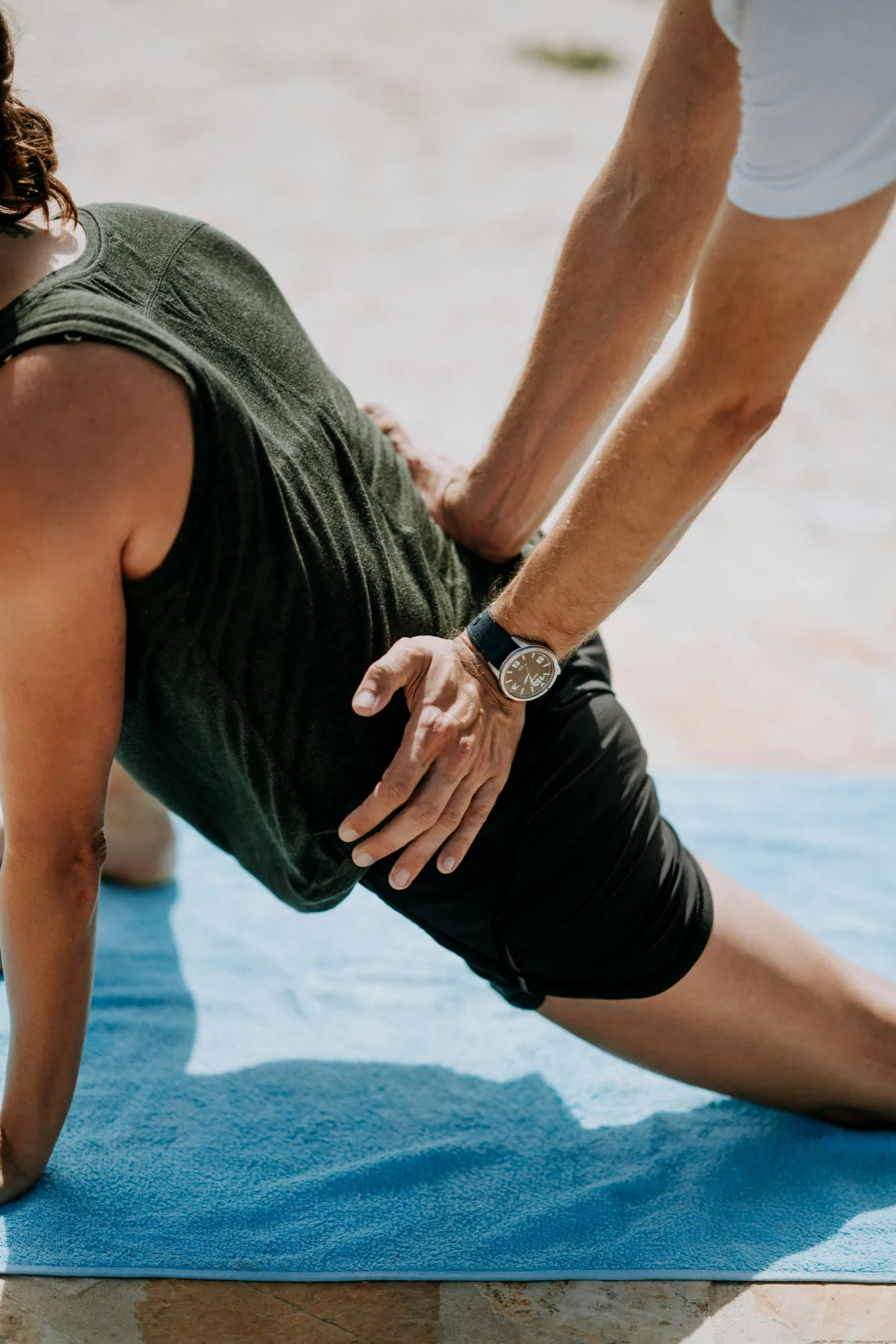
Rehab is not the absence of pain
The most common mistake in returning from injury is using pain as the finish line. Pain typically settles well before the tissue has remodelled and long before your capacity to tolerate load has come back. If you return at the point where it stopped hurting, you return to your sport with a deficit you cannot feel, and that is where the reinjury comes from.
Proper rehabilitation runs past that point deliberately, rebuilding strength, control and tolerance until you can meet the demands the sport actually places on you.
What the demands actually are
Different sports break bodies in different ways, and rehab that ignores that is just general exercise.
Golf loads rotation and asks the hips and thoracic spine to separate at speed, which is why the low back and lead hip show up so often. Tennis and pickleball add sudden deceleration and overhead work. Running is repetitive load tolerance. Boating and paddling ask the shoulder to work at end range with an unstable base.
We rehab toward your specific demand, which means late-stage work looks like your sport rather than looking like a clinic.
The stages
Early on, the job is settling the irritated tissue and restoring what movement has been lost, using manual therapy, dry needling where it helps, and graded movement. This part is where most people feel the fastest change, and it is also where most people stop.
The middle is rebuilding strength and control through full range, at loads that progress on purpose rather than by feel.
The last stage is the one that gets skipped: testing you against the actual demands of your sport, at speed, under fatigue, and in the positions where the injury happened. That is what tells us whether you are ready, and it is not a conversation about how you feel.
Where we do it
Wherever you train. Your gym, your club, your home, the course, the court. Late stage rehab needs space and load, and doing it in the environment you are returning to removes the awkward gap between finishing therapy and actually playing again.
What you get
The $350 evaluation covers a full assessment, sport-specific movement or swing analysis on high-speed video where it is relevant, and your first treatment. After that, most people take a 3, 5 or 10-visit package, and dry needling is included in all of them.