What it is
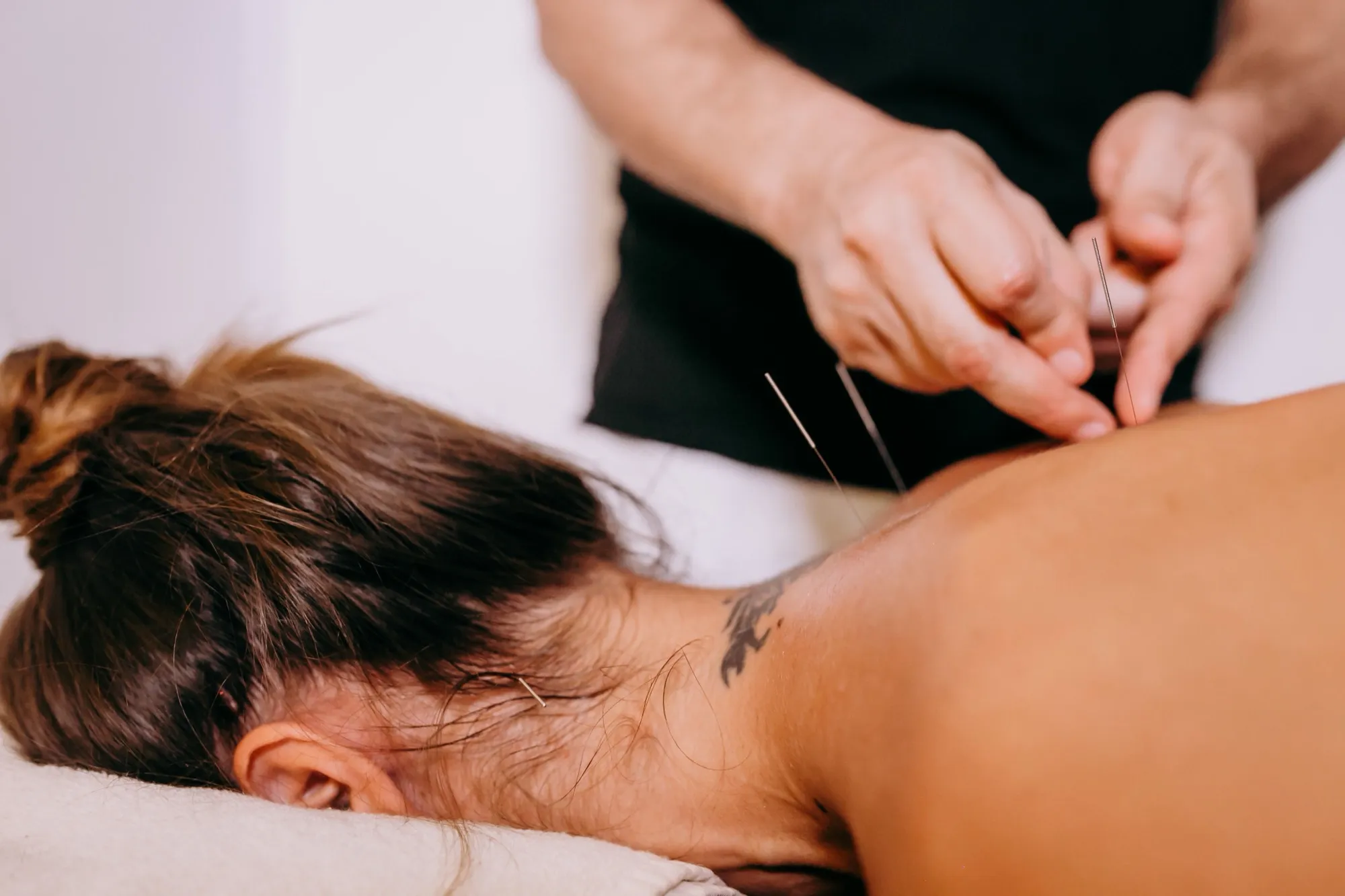
Dry needling uses a thin filament needle, the same kind used in acupuncture, to reach a trigger point inside a muscle: a taut, irritable band that refers pain and restricts how the muscle works. The needle is “dry” because nothing is injected. The effect comes from the mechanical contact itself.
When the needle reaches the trigger point you often get a local twitch response, a brief involuntary contraction that most people feel as a deep cramp releasing. That response is the point of the technique.
Why we use it
Some restrictions do not respond to stretching, and some respond to it only briefly. A trigger point in the glute or the thoracic paraspinals can keep reproducing the same movement limitation no matter how diligently you do the exercises, because the muscle is not able to lengthen and shorten normally.
Releasing that band opens a window. What matters is what happens inside the window. Needling on its own tends to give a few good days and then drift back. Needling followed immediately by the corrective work, the loading, and the home program is what makes the change stick.
That is why it is included at no additional cost in every visit package, rather than sold as an upsell. It works better as one part of an hour than as a service on its own.
What it is not
It is not a massage, it is not acupuncture, and it is not a standalone treatment. If someone offers you dry needling without first examining you and identifying which muscle is actually driving your problem, they are treating where it hurts rather than why.
What a session involves
We examine and palpate to find the band that is actually driving your symptoms, which is often not where you feel the pain. Referral patterns are consistent and well documented: a trigger point in one muscle reliably produces symptoms somewhere else, which is why so many people spend months treating the wrong area.
The needling itself takes a few minutes. The rest of the hour goes into what makes it hold: manual therapy, movement retraining, and the specific loading your plan calls for.
Expect some soreness the next day. Drink water, keep moving normally, and do the home program.
Who should mention something first
Tell us before we start if you take anticoagulants, have a bleeding disorder, are pregnant, have a pacemaker, or have a needle phobia. None of these are automatically disqualifying, but they change how or whether we proceed, and that is a conversation to have before a needle comes out rather than after.