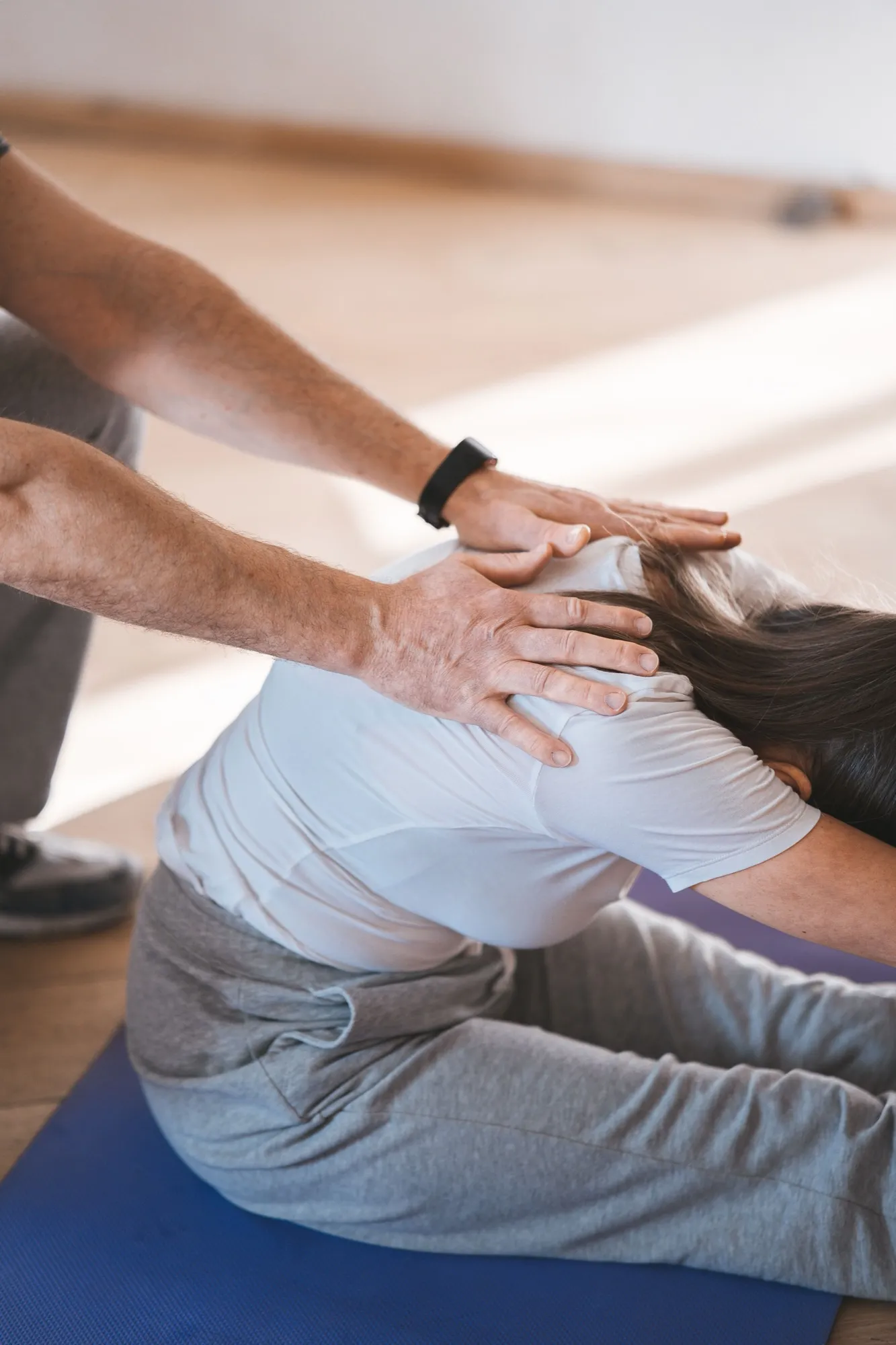
Falls are not random, and they are not simply a consequence of getting older. They happen in identifiable places for identifiable reasons, and most of those reasons respond to something.
Why balance fails
Balance is not one system. It is several working together: the strength to catch yourself, sensation in your feet telling you where the ground is, vision, the vestibular system in the inner ear, and the speed of the reaction that ties them together.
Falls usually happen when more than one has quietly degraded. That is why a single intervention often disappoints, and why working out which systems are contributing is worth more than a generic exercise sheet.
The house
Start here, because it is cheap and immediate.
Lighting on routes walked at night. The path from bed to bathroom is where a disproportionate number of falls happen, in the dark, in a hurry, half awake. A plug-in nightlight is a few dollars.
Rugs. Loose rugs and rucked edges are a leading trip hazard. Either fix them down properly or take them up. This is usually the least popular recommendation in the house and one of the most useful.
Step edges. Any step with poor visual contrast, particularly a single step down to a lanai or a sunken room, deserves a strip of contrasting tape. A single unexpected step is more dangerous than a full flight, because a flight of stairs gets your attention and a lone step does not.
Bathrooms. Wet, hard, and full of things that look grabbable but are not. A towel rail is not a grab rail and will come off the wall. Rails need fitting into something structural, and in a place that matches how the person actually moves, which is worth watching before drilling.
Cables, and the route to the front door. Both obvious, both routinely missed.
The training
Environment changes remove hazards. Training changes what you can recover from, and that is the half people skip.
Balance improves by being challenged safely rather than avoided. That means working near the edge of what someone can currently manage, with something solid to hand, and progressing it.
Lower limb strength underpins everything else, and the single most useful measure is whether you can stand up from a chair without pushing off with your hands. If you cannot, that is the thing to work on first, because it determines whether a stumble is recoverable.
Then reaction and stepping: the ability to get a foot out quickly enough to catch yourself. That is trainable and it is what turns a fall into a stumble.
The part nobody mentions
After a fall, or sometimes after a near miss, people quietly reduce what they do. Fewer trips out, less walking, more sitting.
That reduction lowers immediate risk and raises it over months, because the strength and balance that would have prevented the next fall come from the activity that has just been given up. It is a loop, and breaking it is as much a part of the work as any exercise.
If someone in your family has stopped going out since a fall, that is not caution to be respected quietly. It is a finding worth acting on.
When to get it assessed
If you have had a fall, if you have had a near miss that frightened you, if you are holding furniture as you move around the house, or if you have started avoiding things you used to do, an assessment is worth the time.
Doing it in the home rather than a clinic means the person assessing it can see the actual hazards rather than asking you to describe them.
Lindsey Bolin is a Doctor of Physical Therapy working with older adults across Naples and Marco Island, in their own homes.